
In April 2021, I joined a B2B logistics company in hyper-growth as the Head of Design. Tasked by my manager, Rangga Husnaprawira, Kargo Head of Product at the time, I faced the challenge of reshaping an underperforming design team. Previously, the team struggled with delayed deliveries, frequent bottlenecks, and misaligned expectations with stakeholders regarding the team's impact on the company's growth. My mission was to build a successful and effective team—determining the optimal size and skill mix—while scaling operations prudently to enhance collaboration across departments.
Kargo is a series A technology company based in Indonesia aiming to transform Indonesia's USD 250Bn logistics trucking industry. Most of the logistics process in Indonesia is still being done manually by pen and paper, so Kargo aims to connect shippers with high-quality transporters by leveraging technology and driving transparency, efficiency, and accountability. Shippers, transporters, and truckers can connect, transact, and track shipments in real-time on Kargo's platform, which can be accessed via the website and mobile app.
Design practitioners in an organization can get stuck in a pattern where they practice design-for-design’s sake, without truly understanding the organization state and needs, so there was a disconnect between design and other teams. This project was a space for me to learn how to build a design team that could bring value to the organization through open communication as well as clarity on expectations
Engaging Team and Stakeholders
My initial approach to the challenge was to conduct one-on-one meetings with design team members to gather insights on the current challenges and strengths. I also held weekly check-ins with senior design team members to involve them in decision-making and foster ownership.In addition to that, I organized cross-departmental meetings with engineering, product management, and operations to understand existing collaboration dynamics. To have a better overview of overall organizational structure, I consulted with HR to review the design team’s structure, compensation, and hiring practices.
Secondary Research
I did some secondary research by going through the design team member’s past performance feedback (with consent from the team members), as well as learning more about the existing job descriptions to understand about the responsibilities and expected expertise and skills across different design team roles and seniority levels. I also evaluated the job postings to asses if they accurately reflect the required skills and were aligned with the company direction and needs at that moment.
On-the-Ground Involvement
To learn more about the projects the design team members were usually involved in, I participated in one ongoing project at the time, alongside a mid-level designer. I also sat on some regular project team meetings to understand more of the workflow and collaboration process between design team members and other departments.

Joining the cross-departmental team meetings and product development activities have helped me understand the dynamics between team members as well as problems that are usually faced by the team in terms of people management
Gaps in team composition and collaboration
Based on my observations, conversations, and involvement in project collaborations, I learned that there was a notable gap in team composition and collaboration in the team. The design team and stakeholders felt understaffed. Most team members feeling overwhelmed and unclear about their tasks and objectives. The sole senior designer was also often overstretched: managing reviews for other designers, their own projects, and mentoring junior designers.
Unclarity in designers' capacity and project planning
Capacity and project planning were unclear. The team and stakeholders lacked the tools and skills to estimate the time needed for design tasks, complicating resource planning. The absence of a system to track ongoing tasks and their durations led to frequent ad-hoc assignments, overwhelming the designers and resulting in poor delivery standards.
Unclarity in the design process and quality standards of design output
Expectations for the design process and quality standards were also unclear, affecting project management. Both designers and project managers struggled with scoping projects, setting milestones, and defining success measures. The team often defaulted to familiar approaches, which was inefficient. There was a lack of visibility into the quality assessment of designs, with most approval responsibilities falling on one senior designer. This centralized approval process caused delays and misunderstandings, as the approver often lacked project context.
High turnover in the design team due to unclarity of career path
Uncertainty about roles and responsibilities and a lack of a structured growth plan drove high turnover in the design team. Designers were also uncertain about their career trajectory within the organization, contributing to job insecurity and dissatisfaction.
I learned how important it is to be open and flexible when it comes to building inter-departmental trust and cooperation. Understanding how to communicate design work to others is paramount, as this enhances design quality and builds better and more sustainable collaboration for the organization.
I categorized the solutions to the observed problems into two categories, short-term “quick wins” and long-term investments, with short-term means it can be done within the next 3 months (give or take), while long-terms means it could take about 6 month to 1 year to improve the state with continuous improvement effort.
Short-Term “Quick-Wins”
Improved Manpower and Capacity Planning
Introduced a framework to categorize design projects by their goal clarity and team familiarity. This aids in estimating the time required for various roles and seniority levels tailored to the projects typically handled at Kargo. Additionally, I implemented tools to enhance visibility and track workload, enabling proactive planning and teamwork.
Clarity in Design Process and Project Management
Developed an introductory deck for the Product Design team and conducted a roadshow to improve interdepartmental understanding and collaboration. Established regular design critique sessions to increase transparency and interaction between the design team and other departments.
Team Composition and Collaboration Model
Analyzed and restructured the design team to include more senior roles, ensuring a more effective collaboration model. Set clear expectations for each seniority level within the new team structure.
Long-Term Investments
Enhancing Talent Quality and Retention
Collaborated with the Talent Acquisition team to update job descriptions and recruitment criteria for design team member roles. I also worked with them to change our talent acquisition strategy and gave input on employer branding.
A more sustainable growth plan for design team members
Initiated the development of a career competency matrix and a career development guide to support design team members' growth strategically. The career competency matrix was developed by incorporating regular feedback from the senior designer and some mid-level designers as well as some stakeholders that work closely with the design team. I also took reference and consulted with other design leader within similar industry (B2B tech).
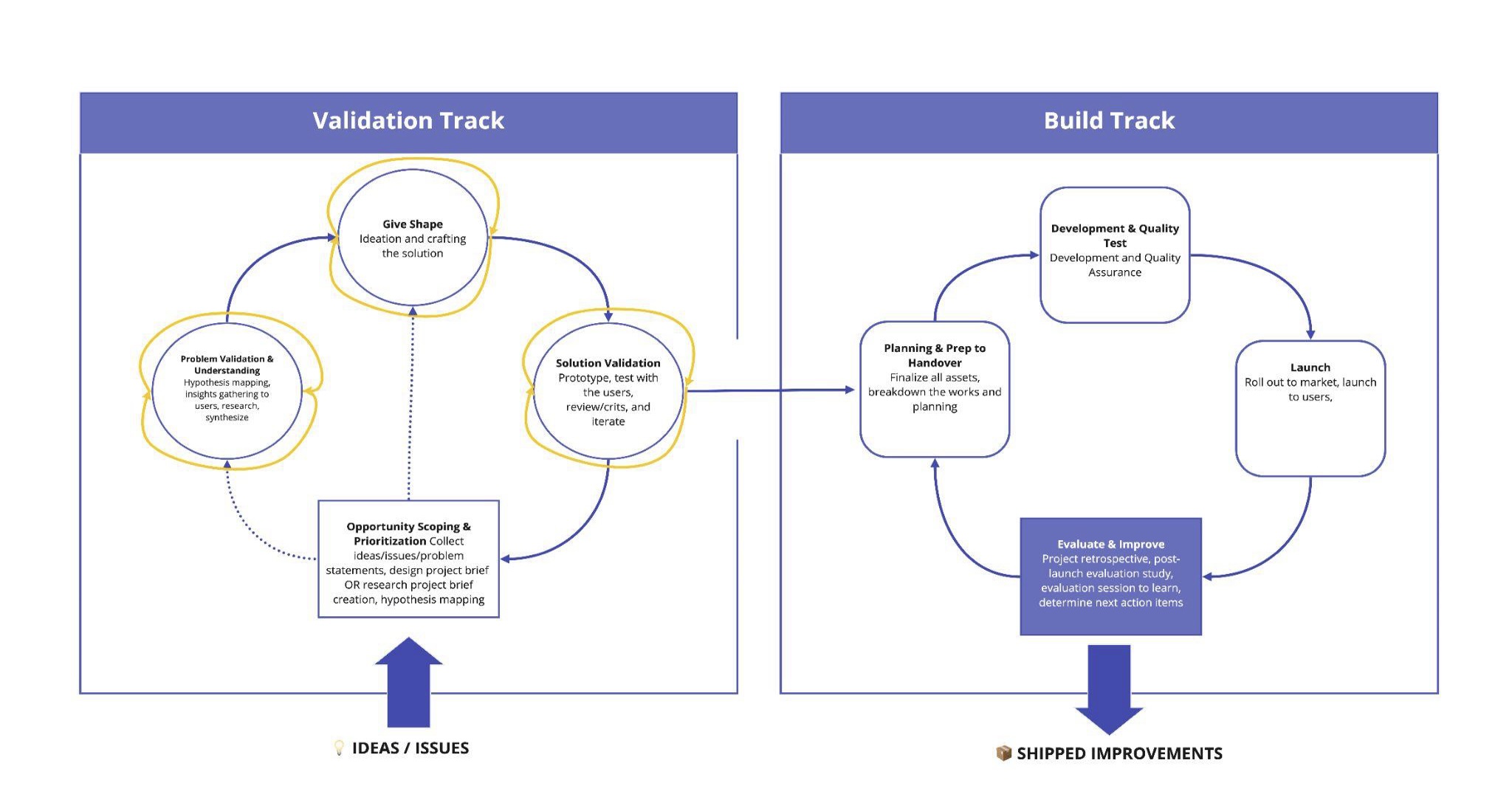
This work resulted in a product development cycle process that was agreed by both the Product, Design, and Engineering departments. This collaborative process helped the teams know what they can expect from each other in our process and how we can collaborate better.
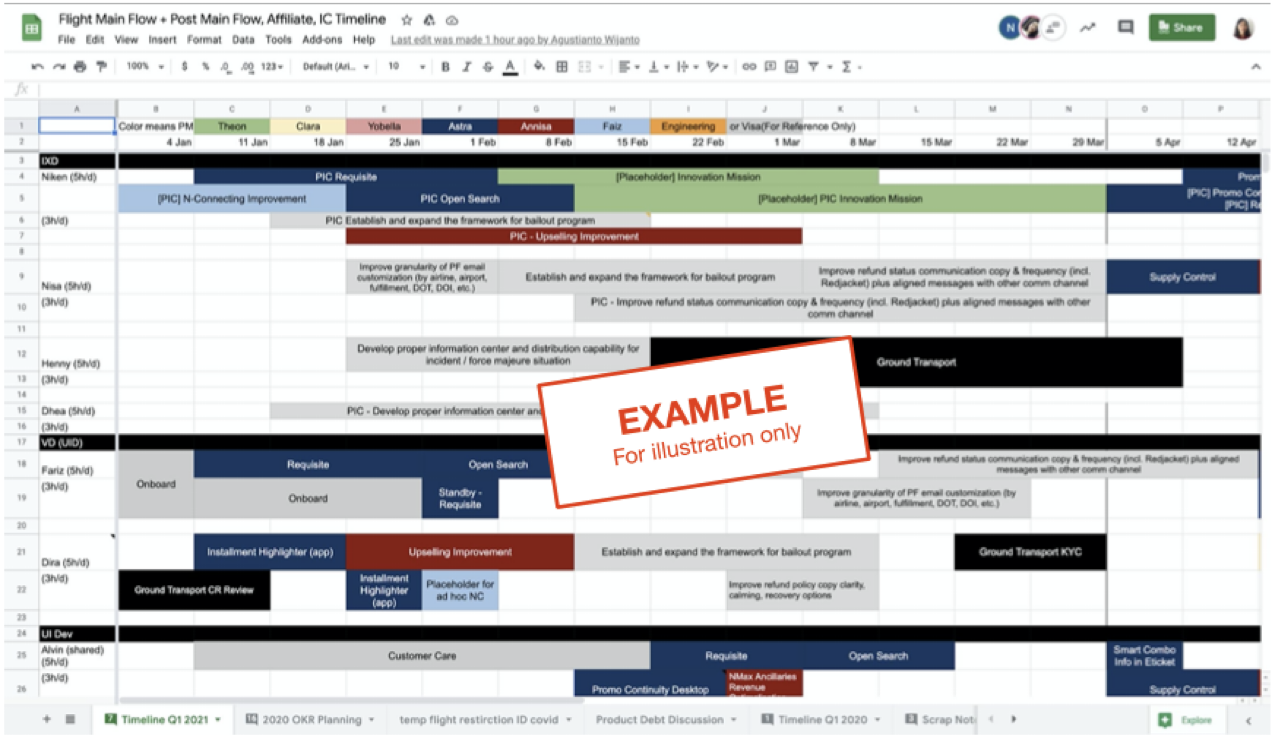
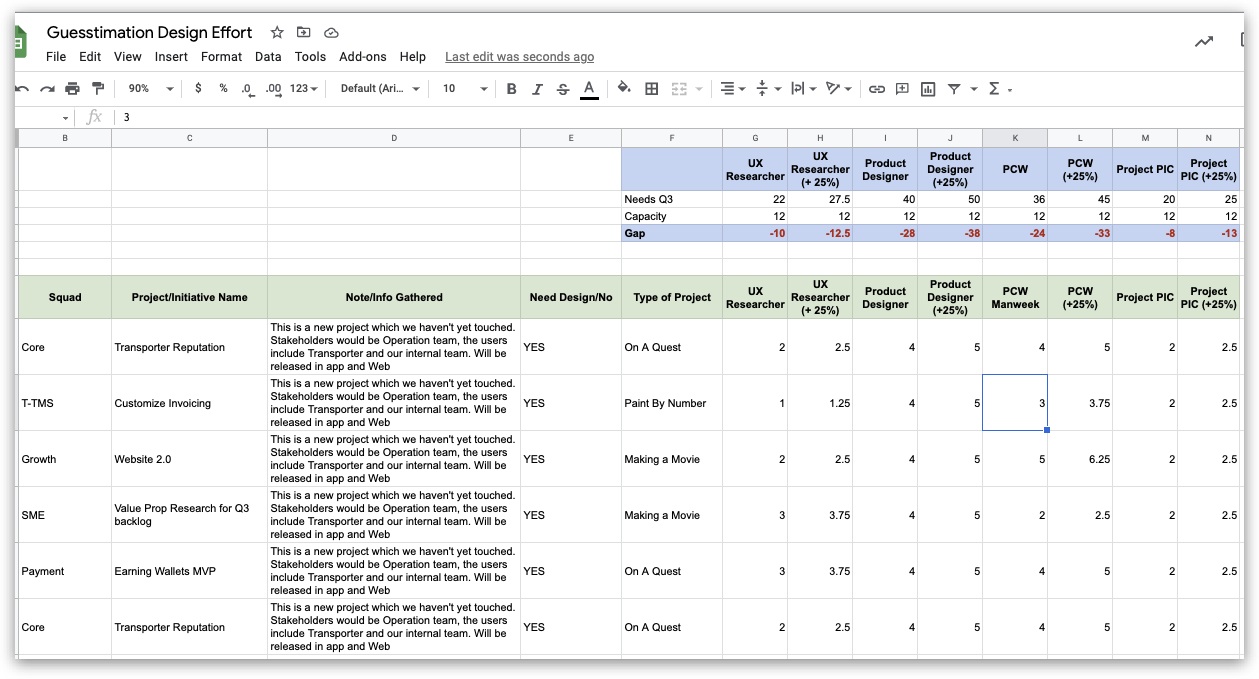
I introduced a straightforward resource planning and project tracking process to the team. I also encouraged each project tam to make regular updates to the sheet so the team can monitor if to ensure we could monitor team capacity and project progress weekly within a quarter. This system allowed us to anticipate hiring needs effectively for upcoming quarters or semesters.
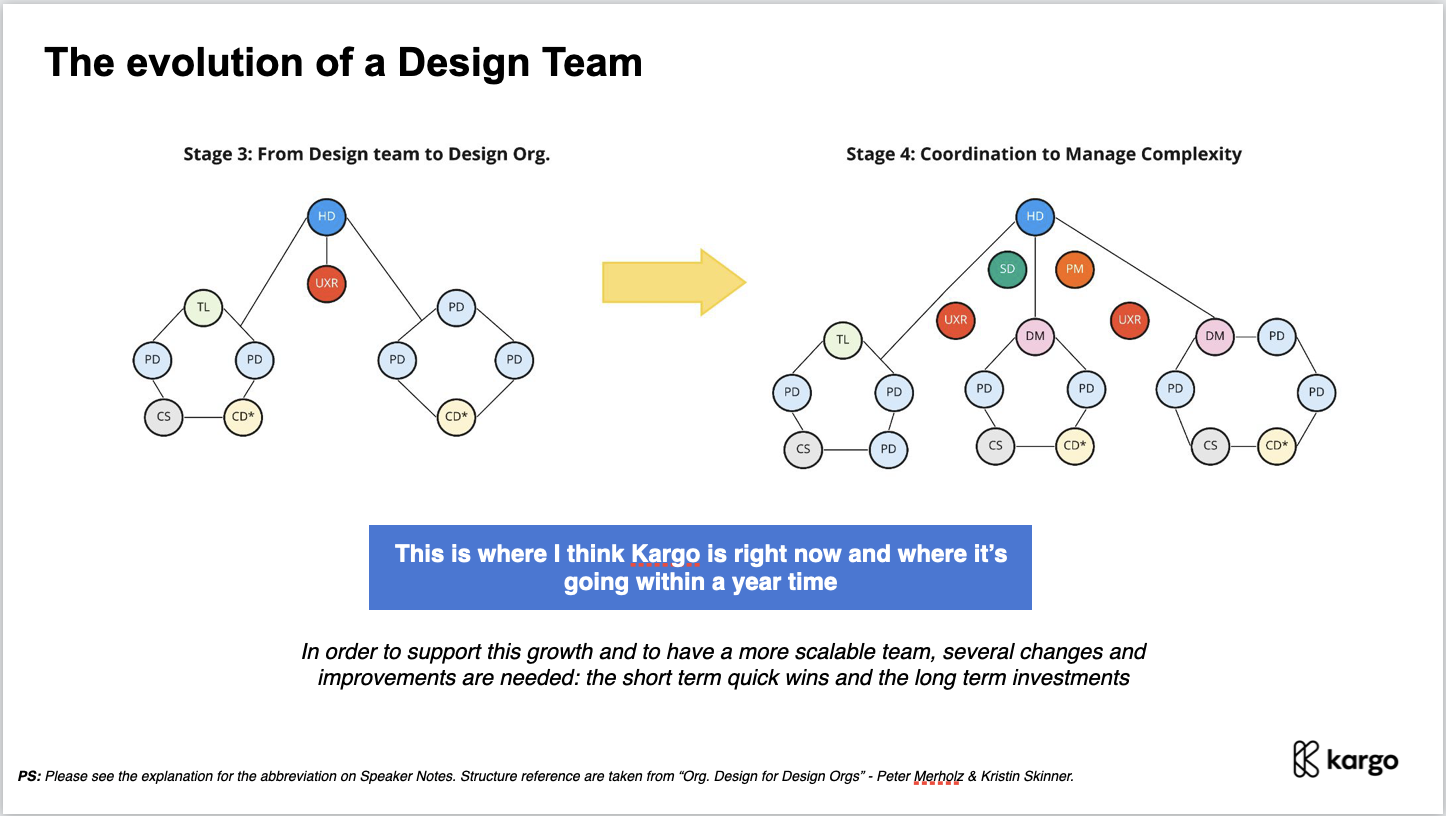
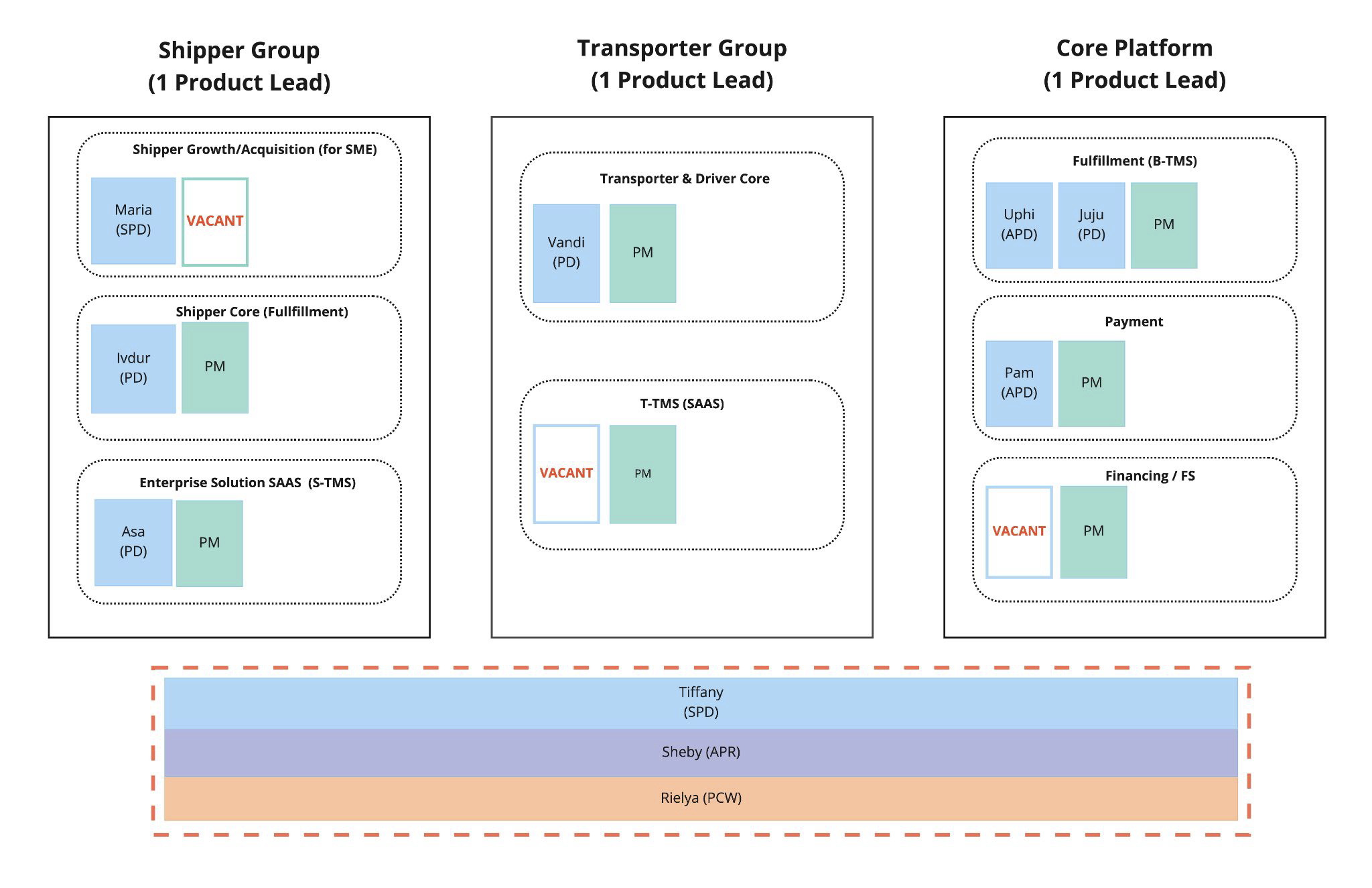
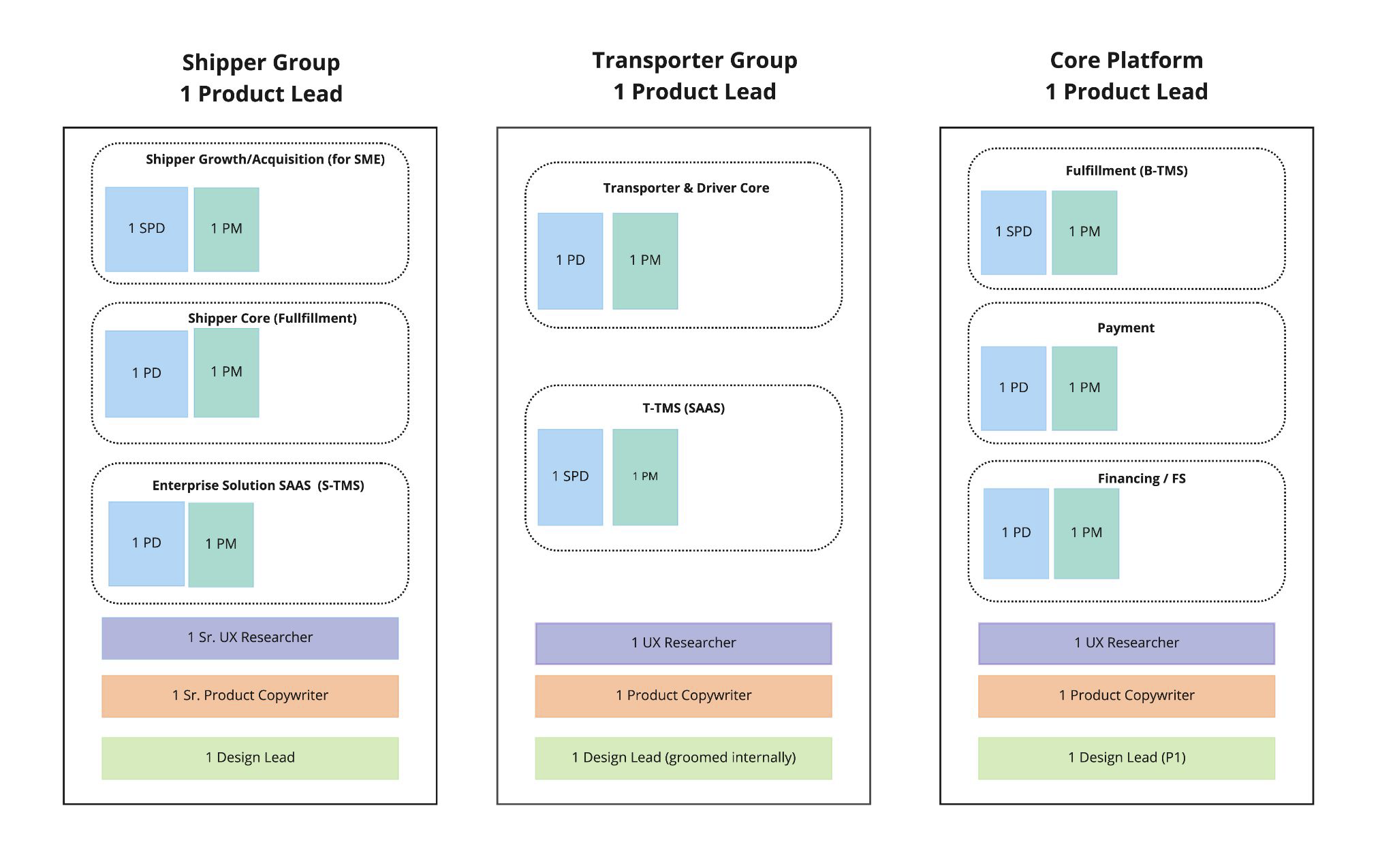
I introduced the team and the stakeholders to the design organizational development framework (top picture) to start the discussion around team composition and proposed to move from the team composition that we had at the time (left picture) to the ideal one (right picture)
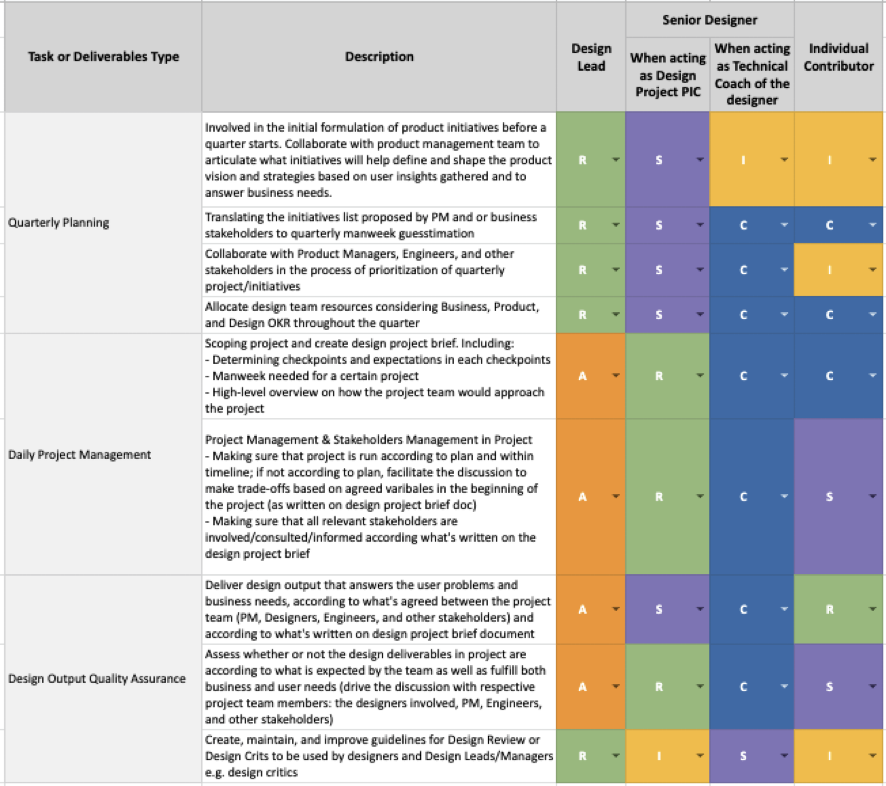
I introduced the team with the project management tool RACI Matrix which we adopted to have a better clarity of responsibilities for tasks, milestones, and deliverables for design team members based on their seniority level and agreed on it with the stakeholders
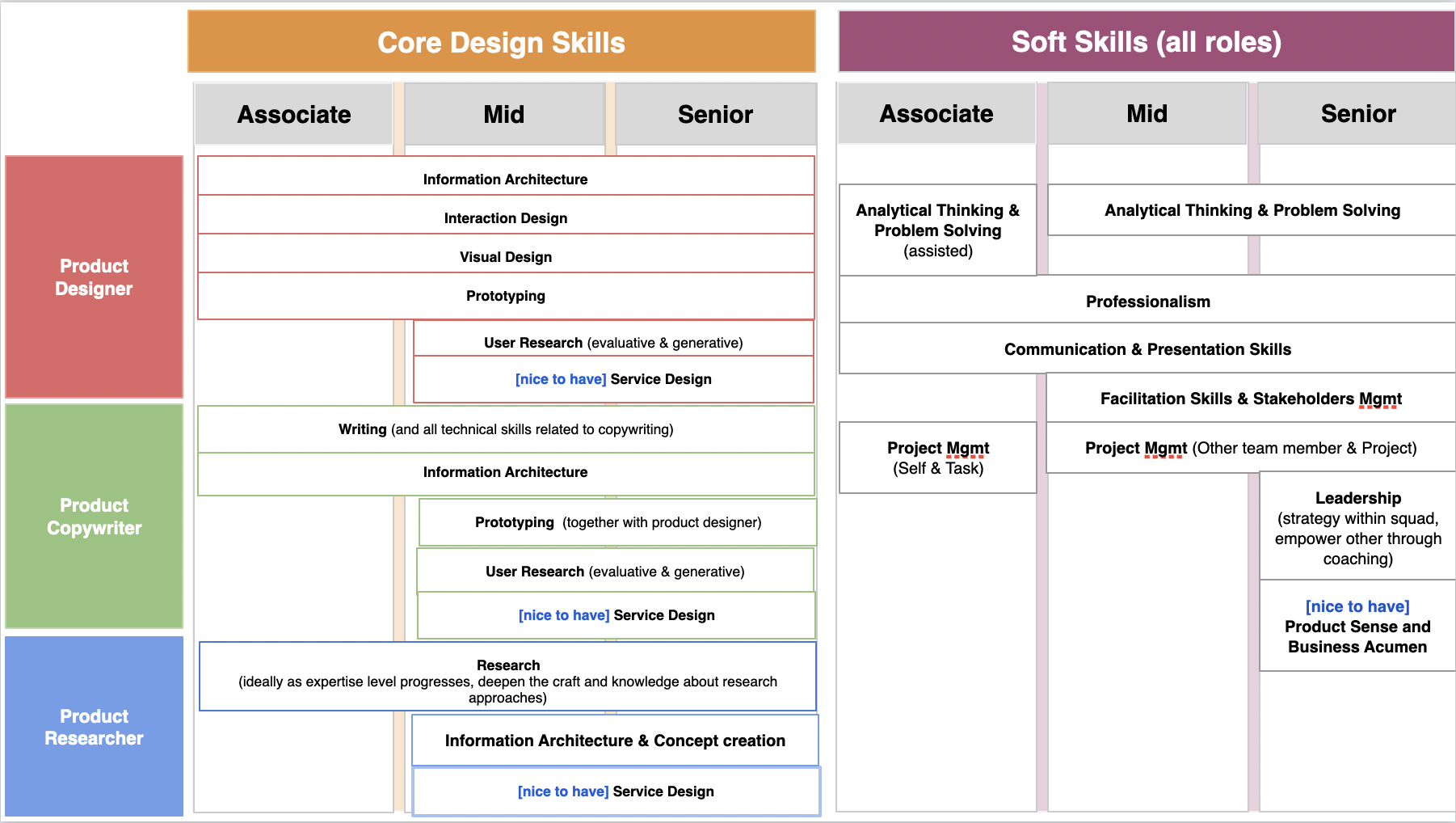
I also introduced the team to the preliminary version of the competency matrix for each role in the team. This way, the team understood what skills they need to have in order to progress their career in the organization. I also developed this competency matrix into its full version and it was helpful to guide career development discussions between the design managers and their team members, as well as helped us in talent acquisition strategies.
A deck I used for roadshows to several teams that were stakeholders for the design team to socialize the new collaboration model and what they can expect from collaborating with the design team. I’ve also invited them to come to our design critique sessions to foster more transparency and understanding of the design process and how to have a better quality of design deliverables.
Outcomes
Learnings
Developing a new team structure and career competency matrix helped me learn the profound impact of clear career progression paths on team morale and retention. It also highlighted the importance of a more strategic approach in building a resilient and engaged team.
The roadshows and design critiques showed me how important it is to be open and flexible when it comes to building inter-departmental trust and cooperation. As a designer, it’s very important to understand how to communicate design work to others, as this enhances design quality and builds better and more sustainable collaboration for the organization.