Over 1.5 years, the Customer Intent team built Verizon's foundational infrastructure for customer-centric design: a 70-intent inventory, an 11-play self-service Playbook, and 6 service blueprints spanning digital, retail, and assisted channels.
But institutionalizing that foundation across a matrixed enterprise hit structural limits self-service couldn't solve. Domain knowledge sat fractured across teams, cross-functional partners worked in incompatible tools with conflicting definitions, and most critically, Verizon's products changed faster than any static blueprint could track. A document was accurate the day it published and degraded from there, with no way for one team's changes to surface as context for another team downstream in the same journey.
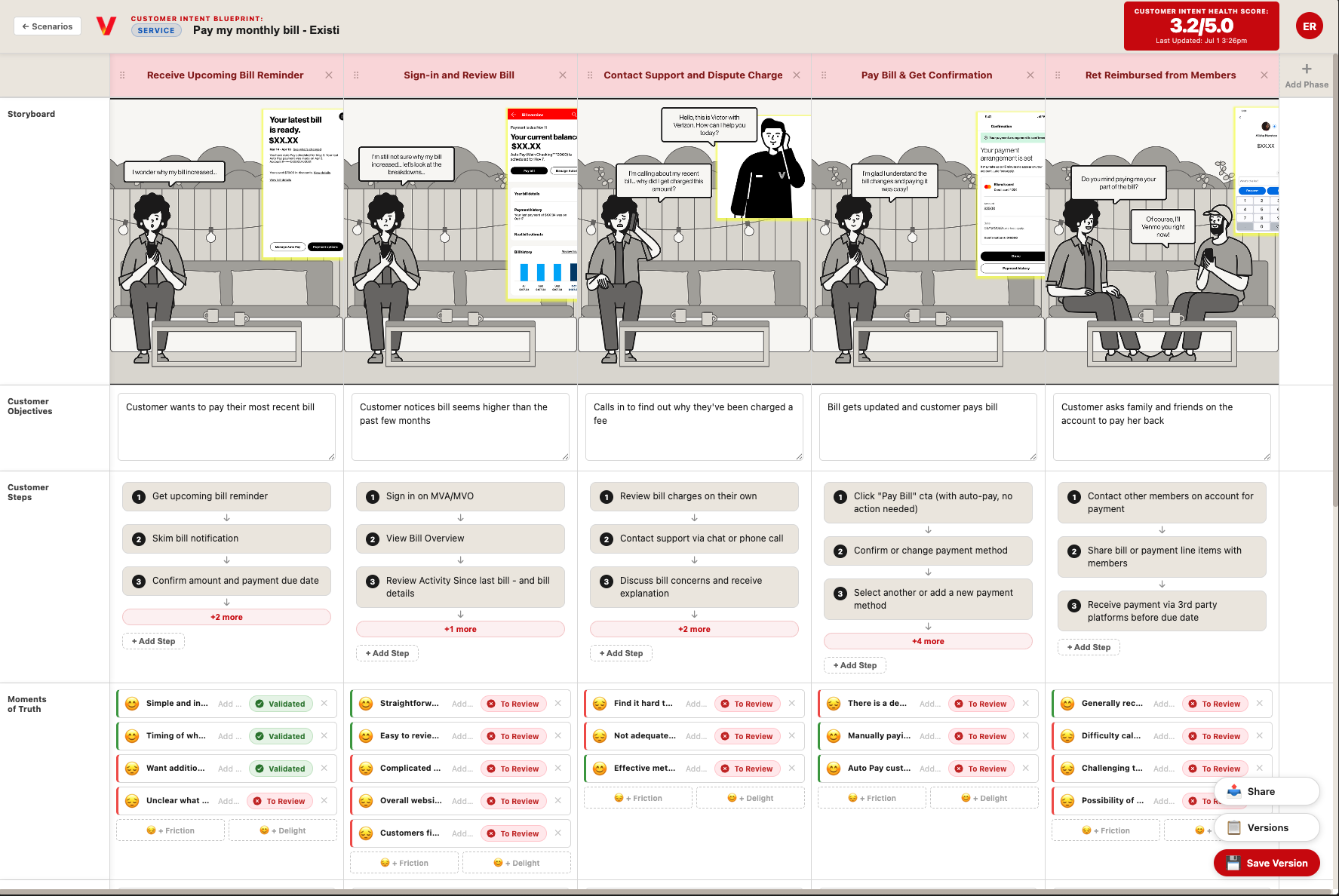
I proposed a shift: instead of a consultative team producing static artifacts, our team needed to evolve into the governance body orchestrating Verizon's Journey Management Ecosystem: an operating model built on three competencies (Insights, Design, Orchestration), moving from point-in-time documentation to a living, continuously updated view of the customer journey.
Customer Intent is Verizon’s internal framework for organizing customer needs around what they are actually trying to accomplish during their interactions with Verizon, rather than around internal product verticals or channel structures. It encourages Verizon team members to approach problems from the customer’s lens and act accordingly, rather than focusing on siloed business objectives.
By the time this case study was written, each intent had multiple pathways documented through service blueprints and customer journey maps, and the team had documented 6 service blueprints on 6 Customer Intents.
To become a more strategic partner to the business, instead of a consultative team producing static artifacts, our team needed to evolve into the governance body orchestrating Verizon's Journey Management Ecosystem: an operating model built on three competencies (Insights, Design, Orchestration)
Diagnosing the systemic blockers
Institutionalizing the customer-centric design across the enterprise faced three structural frictions:
Reframing the model
I proposed a shift from journey mapping: a tactical, one-off exercise producing a fixed artifact, to journey management: an ongoing strategic practice that continuously measures, shares, governs, and optimizes experience, directly connecting design decisions to business and organizational outcomes. This meant the team was operating at the intersection of three competencies:
Proving the technical concept: Prototyping with AI
To prove "continuous and dynamic" wasn't just aspirational language, I proposed and helped shape a working prototype: an interactive tool that hosts live blueprints across intents and is tracked with a shared Customer Effort Score. Erin Reeg, my manager, led the technical build of a Gantt-style mapping tool in VS Code using Gemini and Figma, while I structured the data and shaped what the tool needed to surface to be useful for anyone mapping a journey. Using prompts, wireframes, and examples, we outlined each major page, then uploaded the existing 70+ intent inventory via CSV and refined the prototype over a few weeks.
Including the Customer Intents in the prototype
Each intent maps to multiple blueprints, and each blueprint's pain and delight points are tagged by type (relationship, journey, or interaction), then tallied into a bar graph. Every blueprint also gets a Customer Effort Score, showing how well that intent is currently working for customers.
At creation, each blueprint captures which channel the task happens in, what role the customer holds, and what the improvement goal is. From the customer's perspective, a blueprint displays each phase as a storyboard (objectives, steps, moments of truth, and sentiment) with phase scores averaging into the blueprint's overall CES.
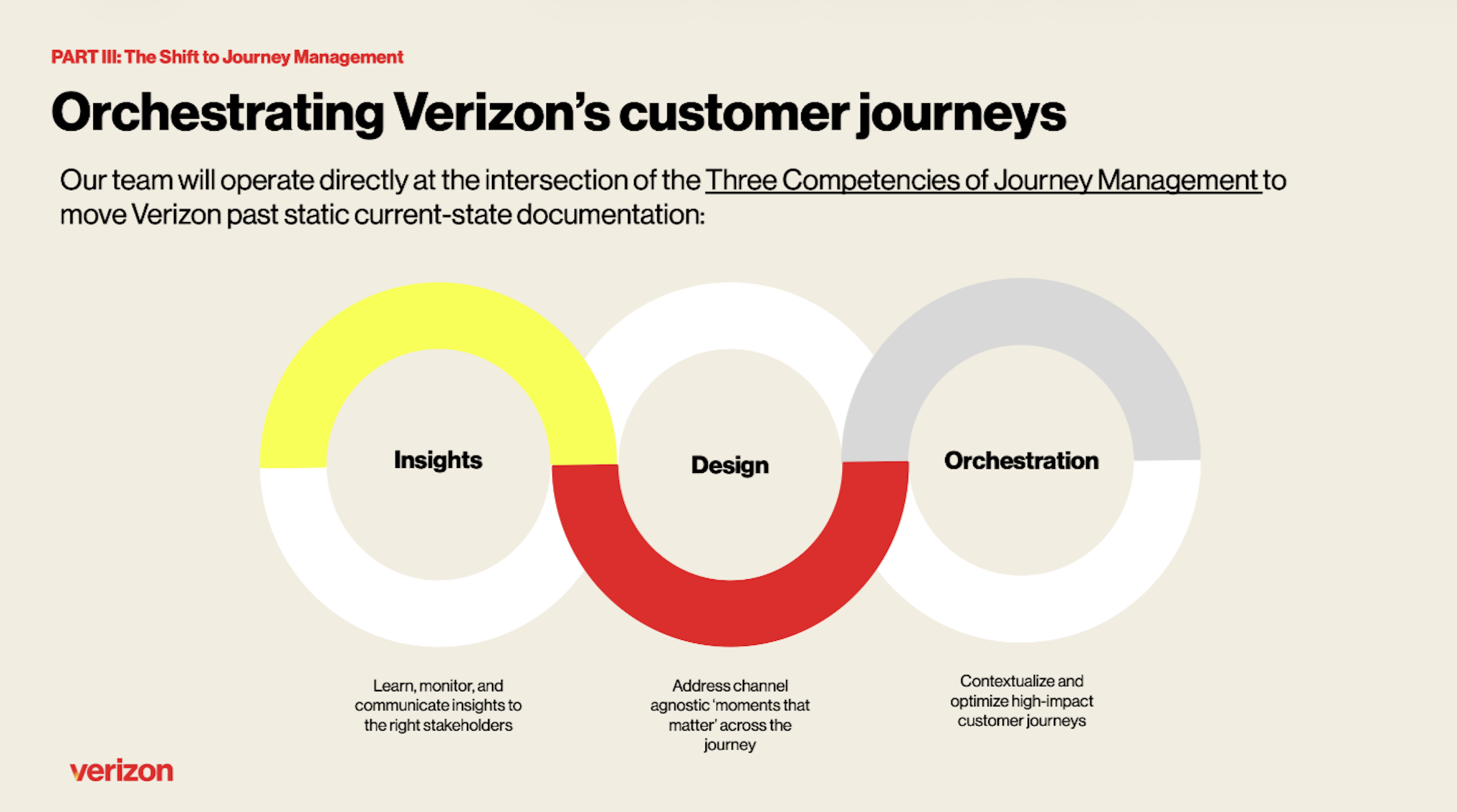
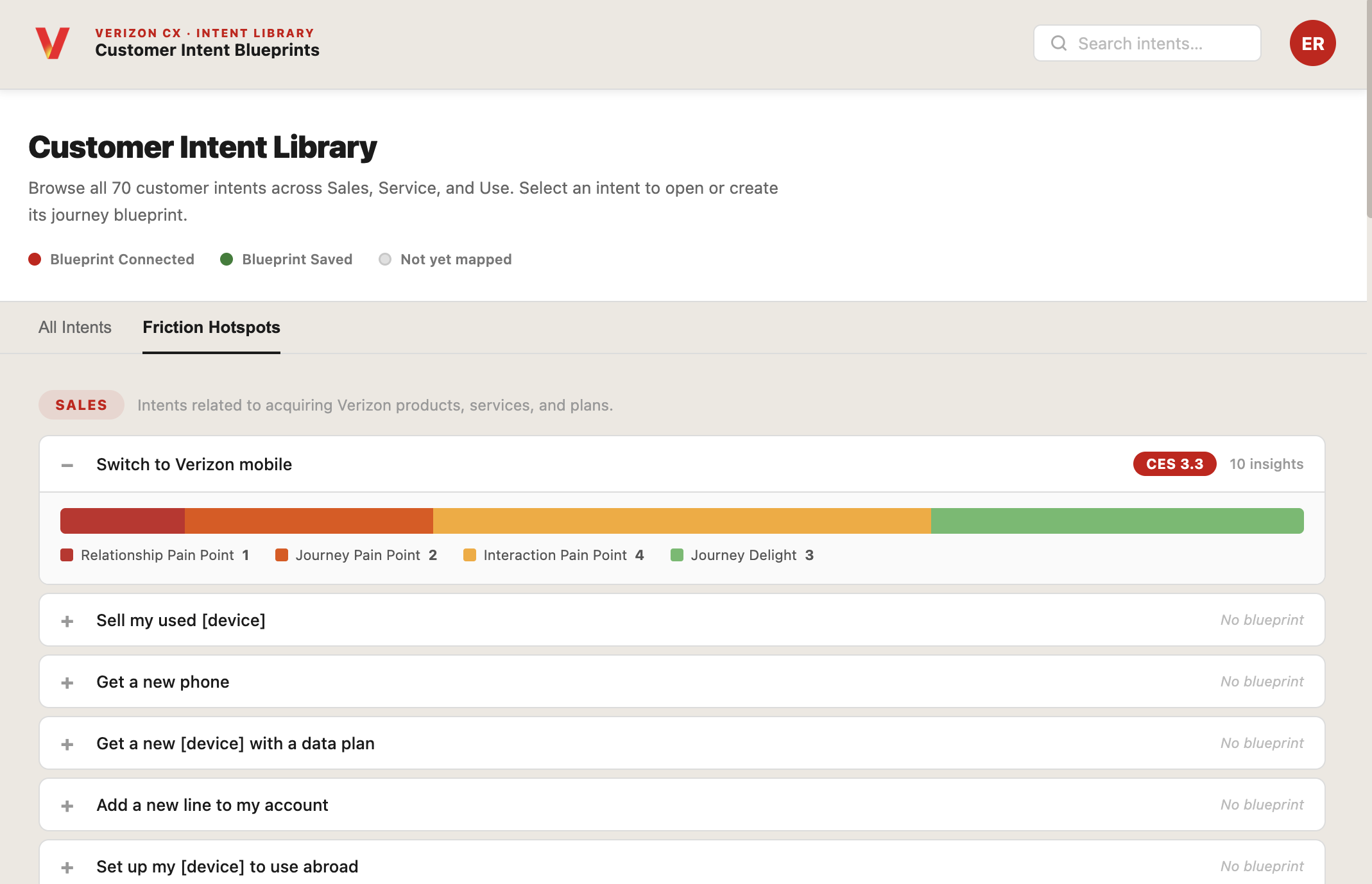
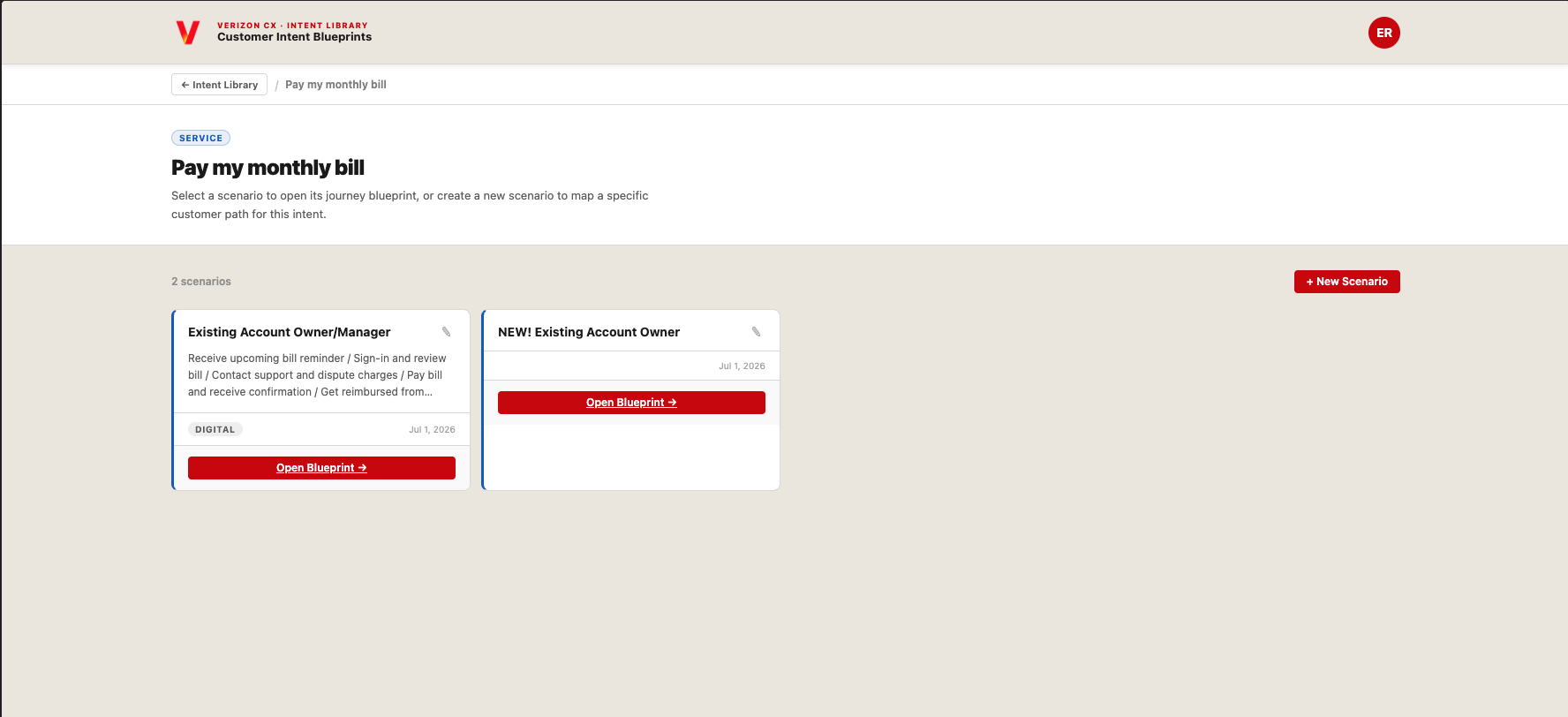
The blueprint tool allows users to choose from the Customer Intent blueprint library and add interactive information to the blueprints as new data have been gathered
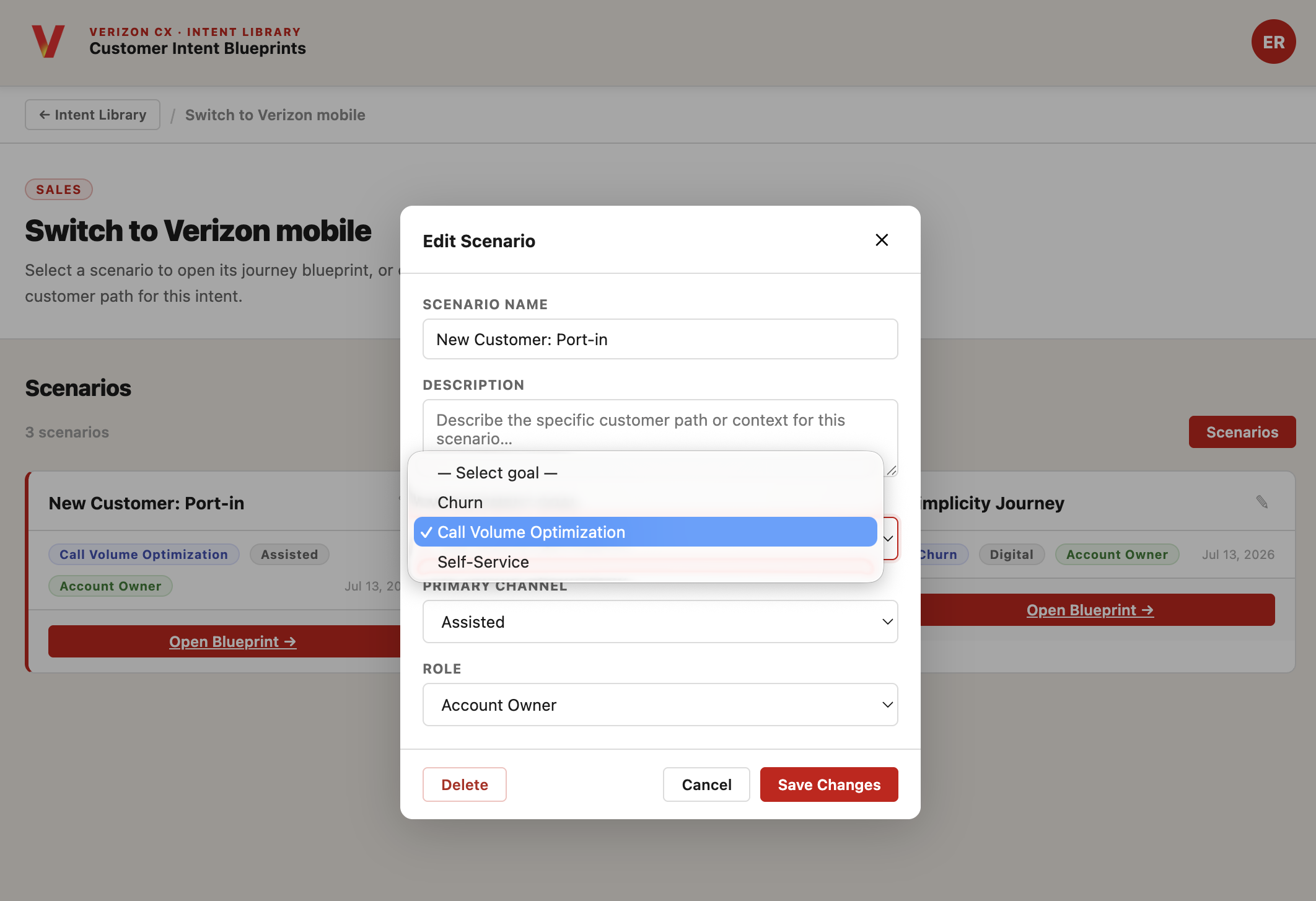
The blueprint tools also allows users to create blueprints of multiple scenarios and pathways, for example if a customer is an Account Owner vs only a member
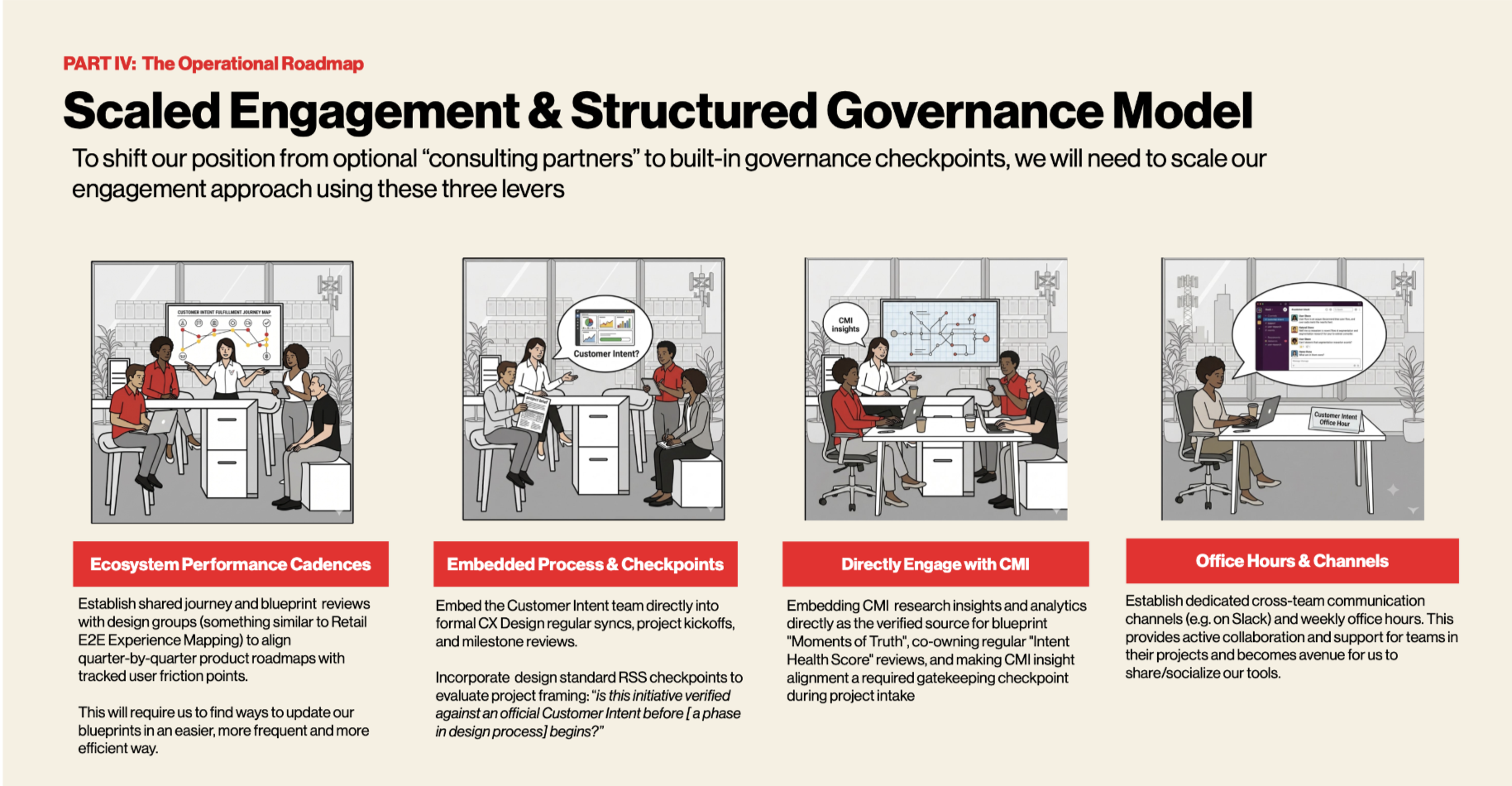
Journey management is an ongoing strategic practice that continuously measures, shares, governs, and optimizes experience, directly connecting design decisions to business and organizational outcomes.
The prototype validated that a living, continuously updated model was technically achievable, not just theoretically sound. When we did our concept testing with our Verizon colleagues (the journey maps and blueprint users in the company), they confirmed that it addressed a genuine gap, and the Customer Effort Score metric surfaced friction patterns that static, one-off blueprints had never made visible.
However, before the proposal moved toward adoption, the team was restructured, and the initiative didn’t continue past this stage. Regardless, the work demonstrated that even at proof-of-concept, closing a structural gap at Verizon’s scale required proposing a change to the team’s mandate and ways of working, not just a better artifact. As a Strategist, AI-assisted prototyping in this case also let me test that argument technically and more tangibly, rather than leaving it as a slide deck that is hard to evaluate against a working model.